
Colored gemstone engagement rings — breaking the diamond tradition
Why more couples are choosing sapphires, emeralds, rubies, and alexandrite over traditional white diamonds.
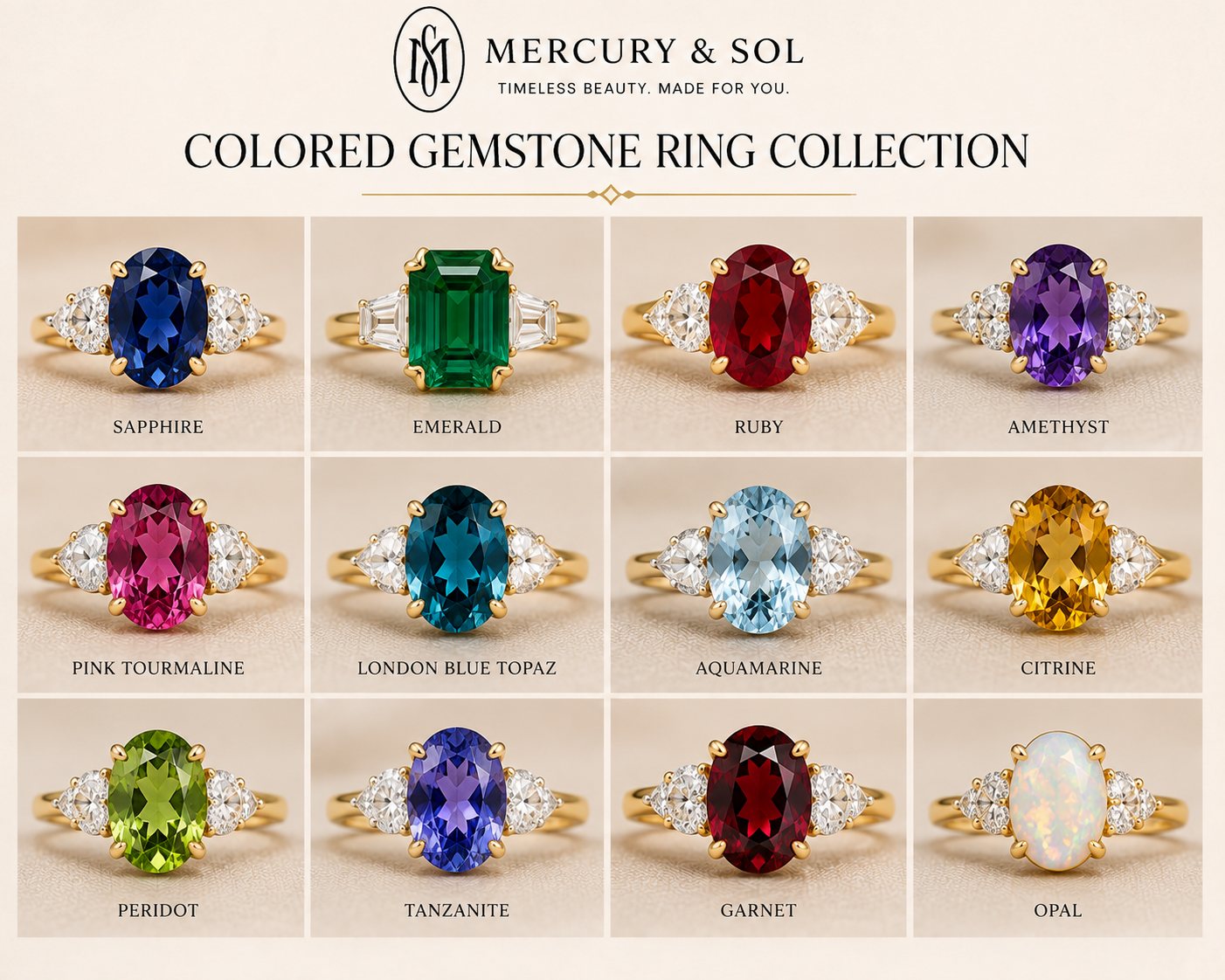
Beyond the white diamond
For most of the 20th century, a white diamond solitaire was considered the only “real” engagement ring. But the tradition is actually quite recent — before the 1940s, colored stones were the norm. Royalty and aristocracy favored sapphires, rubies, and emeralds for centuries. Today, couples are returning to these rich traditions, choosing stones that reflect their personal style rather than convention.
Why colored stones?
Personality
A colored stone makes an immediate statement. Pink sapphire says romance, emerald says boldness, blue sapphire says timeless elegance. The color becomes part of your story.
Uniqueness
Every colored stone has its own character. Even among lab-grown stones, the interplay of color, cut, and setting creates a ring that feels distinctly yours.
Durability for daily wear
The question everyone asks: can a colored stone hold up as an everyday ring? Sapphires and rubies absolutely can — at 9 on the Mohs scale, they’re nearly as hard as diamond. Emeralds (7.5-8) and alexandrite (8.5) are also suitable for engagement rings, especially in protective settings like bezel or halo. All of Mercury & Sol’s colored stones are chosen for their durability in daily wear.
Popular combinations
| Stone | Mood | Popular pairings |
|---|---|---|
| Pink sapphire | Romantic, feminine, modern | Rose gold, white gold halo |
| Blue sapphire | Classic, regal, timeless | White gold solitaire, yellow gold vintage |
| Emerald | Bold, luxurious, distinctive | Yellow gold, bezel setting |
| Ruby | Passionate, powerful, iconic | Yellow gold, three stone |
| Padparadscha | Ethereal, rare, sunset warmth | Rose gold, hidden halo |
| Alexandrite | Magical, unique, conversation piece | White gold, solitaire |
Continue learning
Lab-grown stones
Gemstone education
Buying guides
Ring knowledge