
Ruby vs pink sapphire — how to tell the difference
They’re the same mineral with different amounts of one element. Here’s where pink sapphire ends and ruby begins.
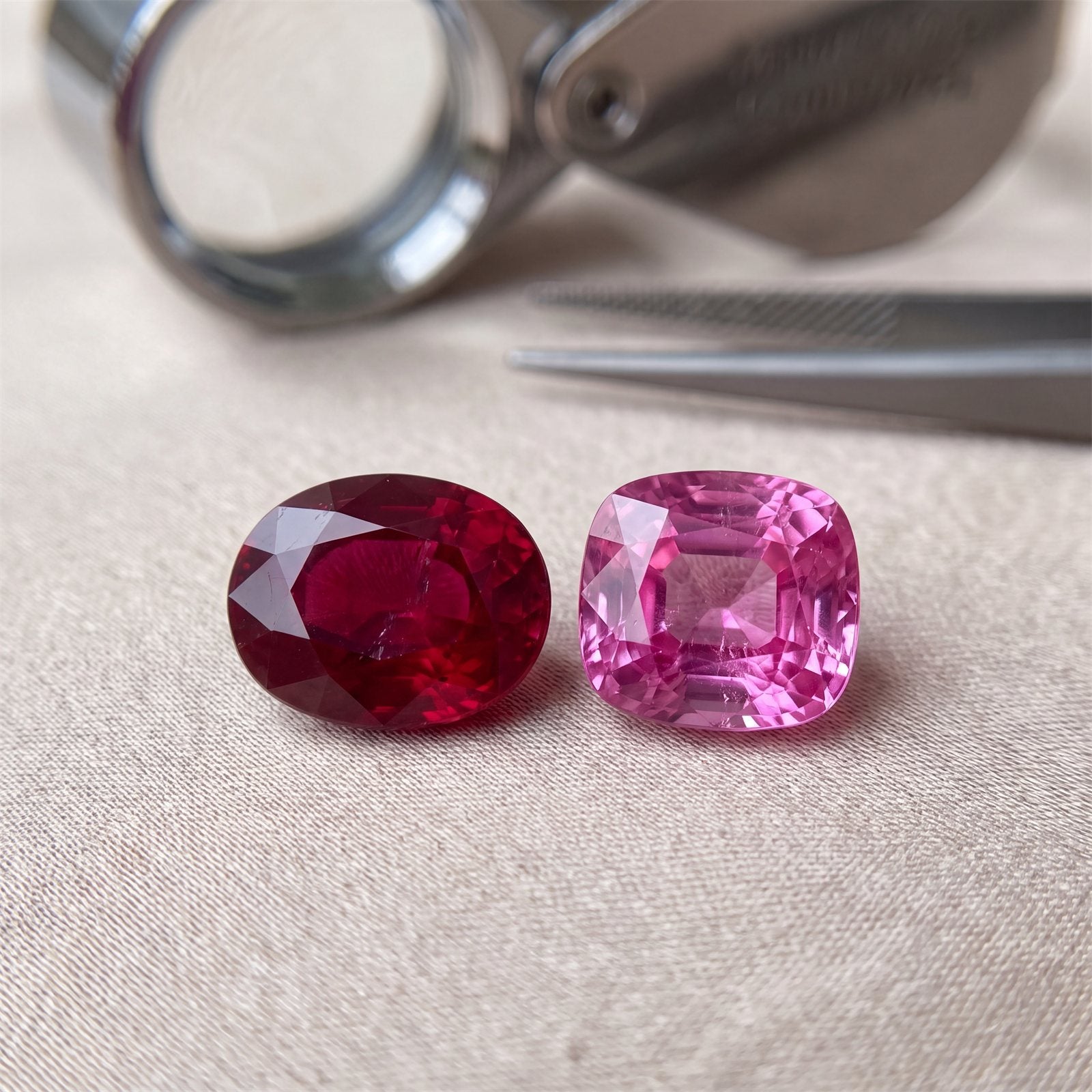
Same mineral, different intensity
Ruby and pink sapphire are both corundum (aluminum oxide) colored by chromium. The only difference is the concentration of chromium — more chromium produces a deeper red that qualifies as ruby, while less chromium produces the pink tones classified as sapphire. There is no universally agreed-upon dividing line; the boundary between a deep pink sapphire and a light ruby is subjective.
Ruby
Dominant red hue. May have secondary purple or orange tones. The most prized color is “pigeon blood” — a pure, vivid red with a hint of blue. Historically one of the most valued gemstones, sometimes exceeding diamond in price per carat.
Pink sapphire
Pink dominant hue. Ranges from baby pink to hot pink to purplish-pink. Lighter, more romantic in character. Has gained enormous popularity for engagement rings as a distinctive, feminine choice.
Practical comparison
| Property | Ruby | Pink sapphire |
|---|---|---|
| Mineral | Corundum | Corundum |
| Hardness | 9 Mohs | 9 Mohs |
| Color agent | Higher chromium | Lower chromium |
| Color range | Red to purplish-red | Light pink to vivid pink |
| Durability | Identical | Identical |
At Mercury & Sol, we carry both. The choice comes down entirely to which shade speaks to you — from the softest blush pink to the deepest crimson red. Both are equally durable, equally brilliant, and equally suited for everyday wear.
Continue learning
Lab-grown stones
Gemstone education
Buying guides
Ring knowledge