
What is pavé? Understanding setting types
Pavé, channel, prong, bezel — how stones are physically held in metal, and why it matters for durability and sparkle.
Setting vs style
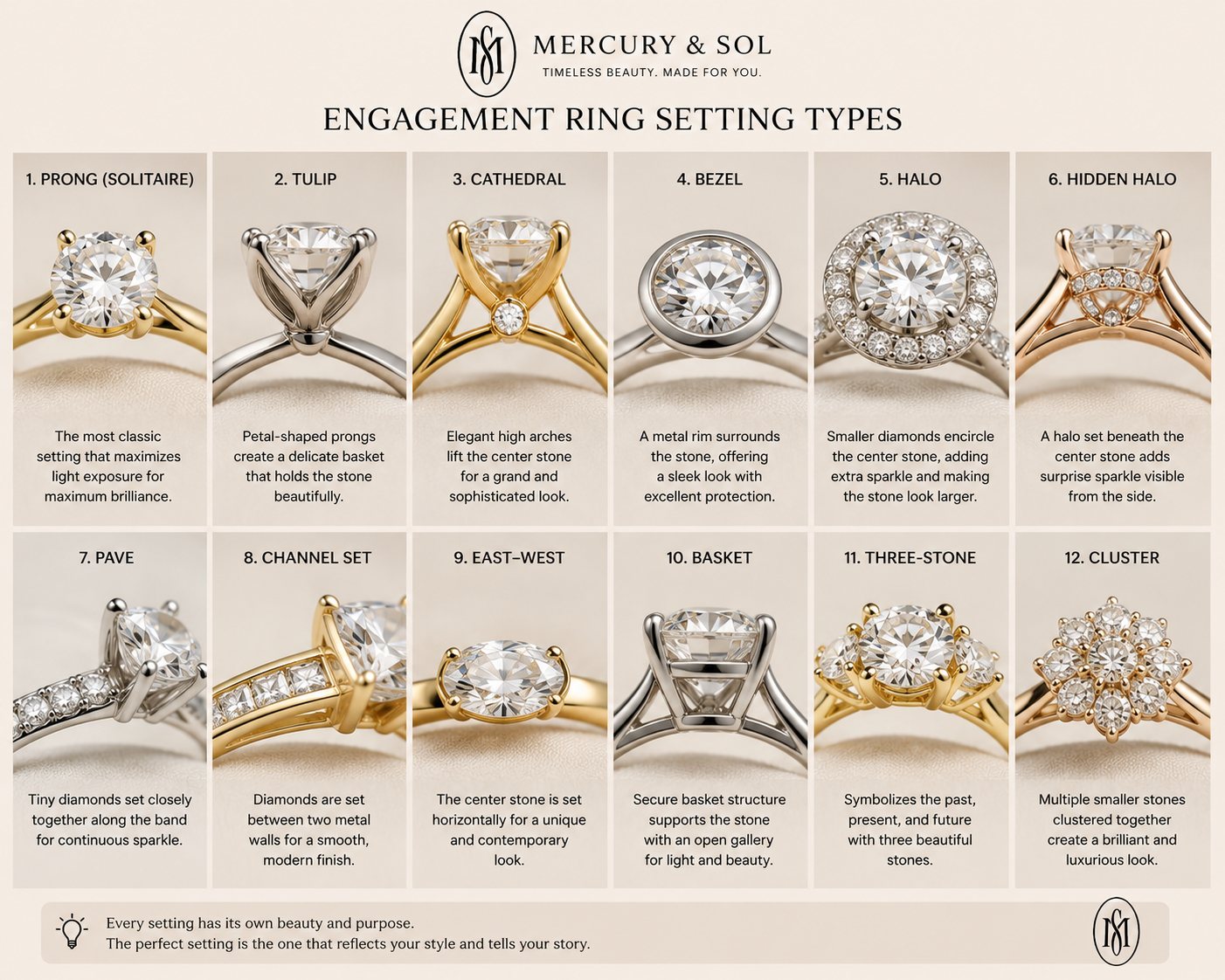
A “setting type” describes how individual stones are physically secured in the metal — the mechanical technique. A “setting style” (solitaire, halo, three stone) describes the overall design. One ring can use multiple setting types: a solitaire with a prong-set center stone and a pavé-set band combines two techniques.
Pavé set
Tiny beads of metal are raised from the band to hold small diamonds in place. The stones sit nearly flush, covering the metal surface — the band appears “paved” with diamonds. Creates maximum sparkle but small stones can occasionally work loose with heavy wear.
Prong set
Metal claws (typically 4 or 6) grip the stone above the band, allowing maximum light to enter from all sides. The most common setting for center stones. More prongs means more security but slightly more metal visible around the stone.
Bezel set
A thin metal rim wraps completely around the stone’s perimeter. The most protective setting — the stone cannot be knocked loose by impact. Creates a smooth, modern silhouette. Allows slightly less light than prongs but offers superior durability.
Channel set
Stones sit in a groove between two parallel metal walls. No prongs or beads are needed — the channel holds the stones securely. Creates a smooth, sleek line of stones. Extremely durable and snag-free. Common in wedding bands.
| Type | Sparkle | Durability | Profile |
|---|---|---|---|
| Pavé | Maximum | Good — small stones may need maintenance | Low, flush |
| Prong | Excellent — maximum light entry | Good — check prongs annually | Elevated |
| Bezel | Good — slightly less light | Excellent — most protective | Low, smooth |
| Channel | Very good | Excellent — stones secured by walls | Flush, smooth |
Continue learning
Lab-grown stones
Gemstone education
Buying guides
Ring knowledge