
The complete guide to sapphires
From classic blue to rare padparadscha — discover every sapphire color, what makes each unique, and how to choose the perfect one.
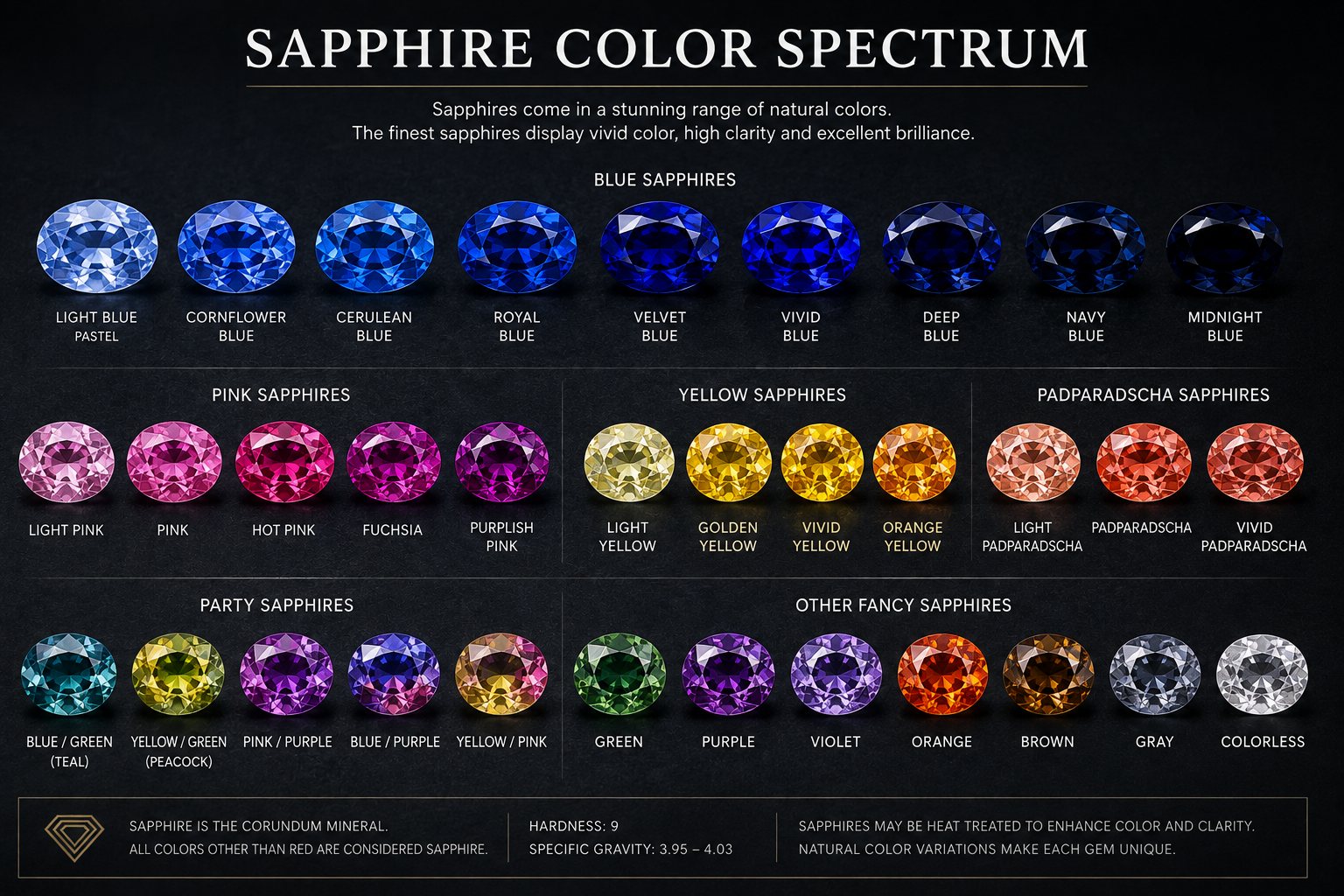
More than just blue
Sapphires are a variety of the mineral corundum (aluminum oxide), and their color depends on trace elements in the crystal. Iron and titanium produce blue, chromium creates pink, and a combination yields the rare padparadscha. Our lab-grown sapphires achieve vivid saturations that rival the finest natural stones.
Blue sapphire
The most iconic color. Fine blues range from velvety cornflower to deep royal blue, with the most prized having a pure hue without gray or green modifiers.
Pink sapphire
Ranging from delicate pastel rose to vibrant hot pink, colored by trace chromium. Pink sapphires have become one of the most popular engagement ring choices, offering a romantic alternative to diamond.
Yellow sapphire
From soft lemon to rich canary gold, colored by trace iron. They pair exceptionally well with yellow gold and bring warmth to any setting.
Violet sapphire
A rich purple with flashes of blue, created by a combination of chromium and iron. Less common than blue or pink, giving them distinctive character.
Padparadscha sapphire
The rarest sapphire — a unique blend of pink and orange, named after the Sinhalese word for lotus flower. Natural padparadscha sapphires command extraordinary prices; our lab-grown versions capture this magical color accessibly.
Sapphires score 9 on the Mohs hardness scale — second only to diamond at 10. This exceptional hardness makes them ideal for everyday wear in engagement rings.
Specifications
| Property | Detail |
|---|---|
| Mineral | Corundum (aluminum oxide) |
| Hardness | 9 Mohs |
| Refractive index | 1.762 – 1.770 |
| Specific gravity | 4.00 |
| Clarity | Eye clean |
| Origin | Lab-grown |
| Colors | Blue, Pink, Yellow, Violet, Padparadscha |
Continue learning
Lab-grown stones
Gemstone education
Buying guides
Ring knowledge