
The environmental impact of lab-grown vs mined stones
A transparent look at the environmental footprint of lab-grown gemstones compared to traditional mining — the facts, the nuances, and where we stand.
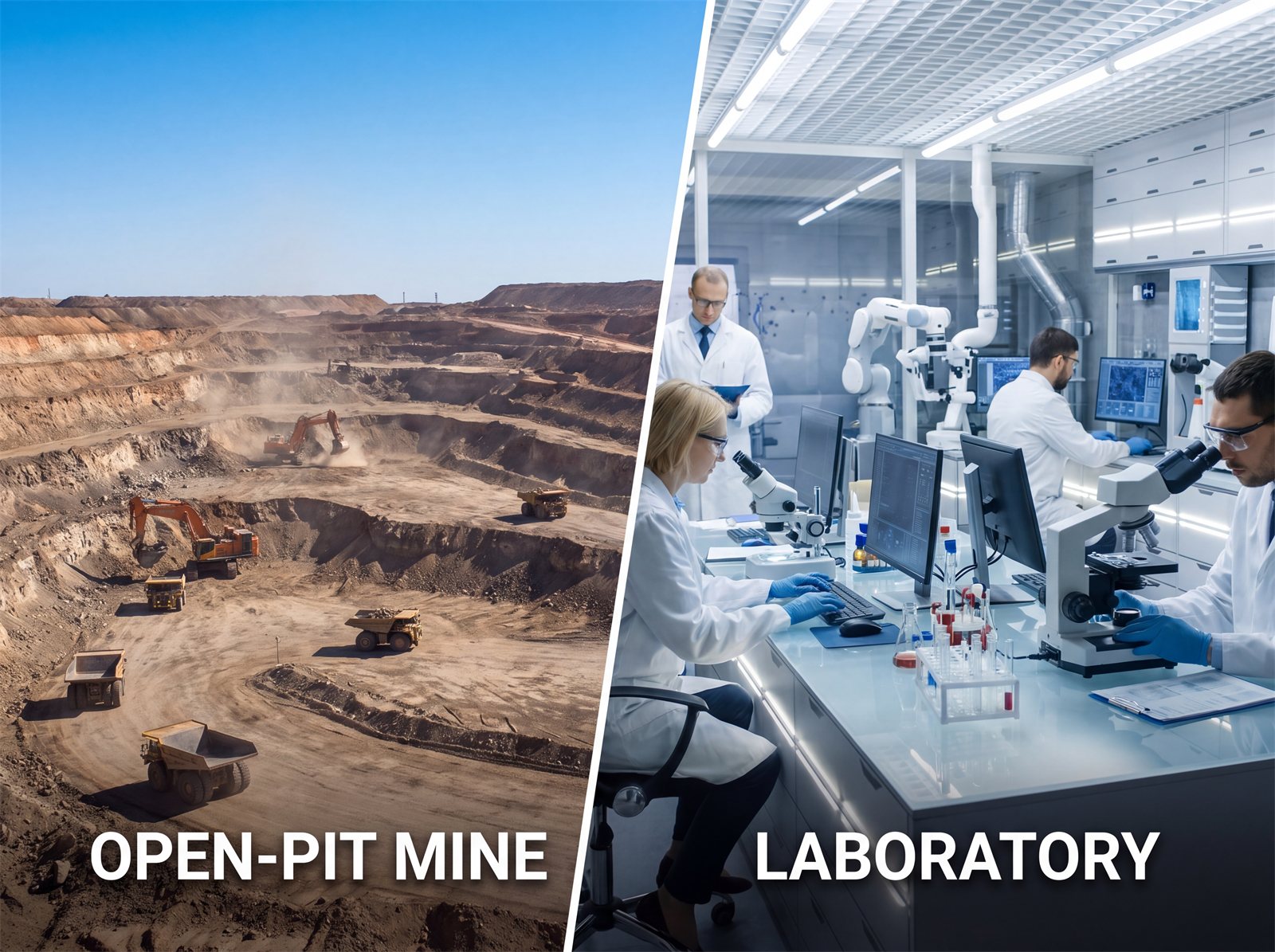
The mining footprint
Traditional gemstone mining involves significant land disruption, water consumption, and carbon emissions. A single carat of mined diamond requires the removal of roughly 250 tons of earth. Open-pit mines can span hundreds of acres and reach depths of over a kilometer. Beyond the immediate extraction site, mining operations affect surrounding ecosystems, water tables, and communities.
The lab-grown footprint
Lab-grown stones are not zero-impact — the HPHT and CVD processes require substantial energy. However, the footprint is contained: no land excavation, no water table disruption, no ecosystem displacement. The primary environmental cost is electricity, and as laboratories increasingly adopt renewable energy sources, that cost continues to decrease.
Land use
Mining displaces hundreds of acres per operation. Lab-grown stones are produced in compact facilities comparable in size to a standard manufacturing plant — the same building can produce stones indefinitely.
Water use
Diamond mining uses an estimated 480 liters of water per carat. Lab-grown production uses a fraction of that, primarily for cooling systems that recirculate water in closed loops.
The nuanced picture
It is important to be transparent: lab-grown production does require energy, and the environmental benefit depends partly on the energy source. Laboratories powered by coal have a larger carbon footprint than those using solar or hydroelectric power. We work with producers who are committed to reducing their energy footprint and who prioritize renewable sources where available.
There is also a social dimension. Some mining operations provide employment and economic development in regions with few alternatives. The environmental conversation is not black and white — but for Mercury & Sol, the overall balance favors lab-grown stones as the more responsible choice.
Our position: Lab-grown stones are not perfect, but they are meaningfully better on every environmental metric we can measure. As production technology advances and renewable energy becomes more prevalent, the gap will only widen.
Continue learning
Lab-grown stones
Gemstone education
Buying guides
Ring knowledge